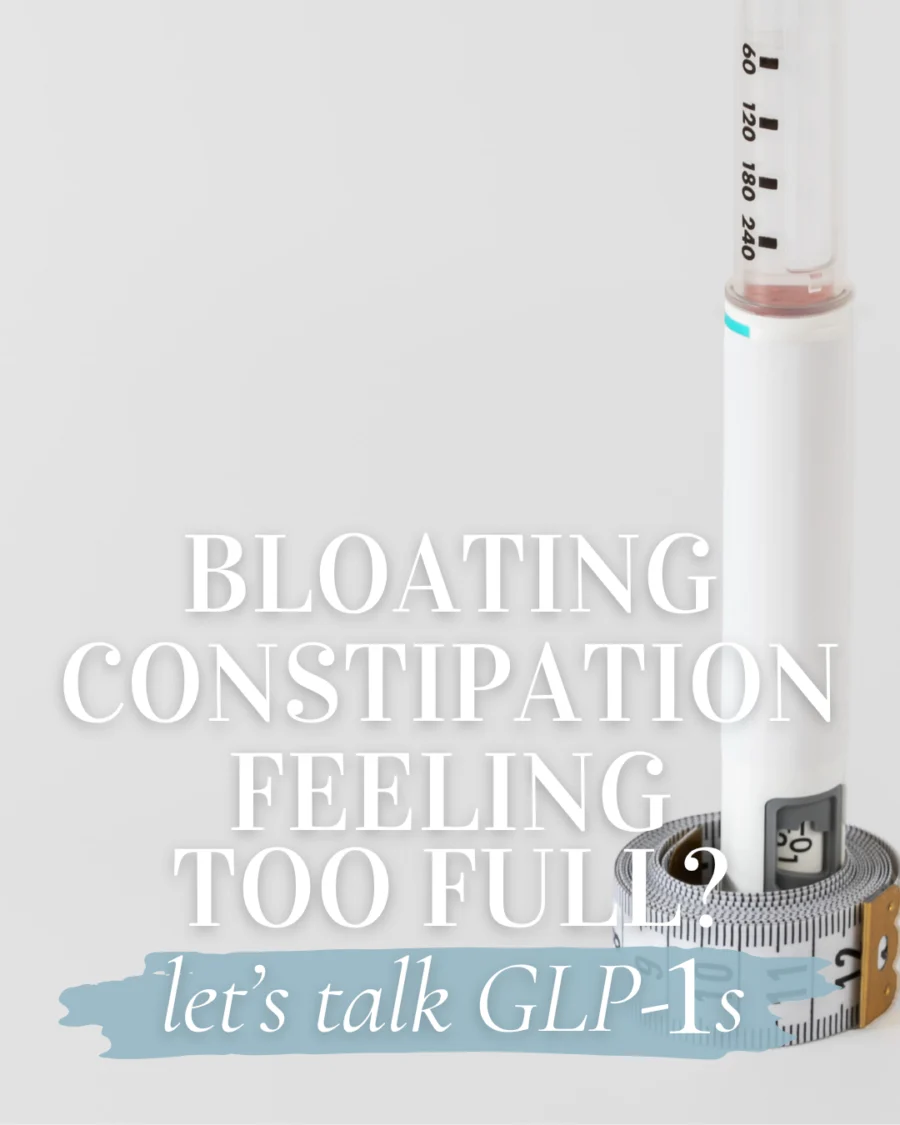
If you’re taking Ozempic or another GLP-1 medication, you may have expected your appetite to change.
What you may not have expected was the constipation. Or the nausea. Or feeling full after just a few bites. Maybe foods you used to enjoy suddenly don’t sound appealing, or meals seem to sit in your stomach much longer than they used to.
For many people, these digestive changes can come as a surprise.
GLP-1 medications have changed the way we approach type 2 diabetes and weight management. They can be very effective medications when appropriately prescribed and monitored. But they also change how the digestive system works, which means gut health deserves to be part of the conversation.
We also want to ask: Are you getting enough nutrition? Is your digestion functioning comfortably? Are you maintaining muscle? Are you staying hydrated? And how can we support your overall health while your appetite and digestion are changing?
What Are GLP-1 Medications Doing?
GLP-1 stands for glucagon-like peptide-1, a hormone your body naturally produces, particularly after you eat. Among its many roles, GLP-1 helps regulate blood sugar, influences appetite, and communicates with the brain about fullness.
GLP-1 receptor agonist medications mimic some of these natural GLP-1 effects. Some newer medications work on GLP-1 along with additional hormone pathways.
The result for many people is less hunger, earlier fullness, and a significant reduction in how much they want to eat.
But there is another effect that matters when we’re talking about gut health.
These medications can also slow gastric emptying, meaning food may leave your stomach more slowly. This effect is one reason GLP-1 therapies can influence post-meal blood sugar, but it can also contribute to digestive symptoms.
Suddenly, that uncomfortable fullness after a small meal starts to make a little more sense.
Why Does Digestion Feel So Different?
If you’ve started a GLP-1 and noticed that your digestive system doesn’t feel quite the same, you’re not imagining it.
Nausea, vomiting, diarrhea, abdominal discomfort and constipation are among the recognized gastrointestinal side effects of GLP-1 medications. Bloating, indigestion and reflux can also occur.
For many people, these symptoms are most noticeable when treatment begins or when the dose is increased. They may improve as the body adjusts.
But that doesn’t mean you simply have to put up with uncomfortable digestive symptoms.
How much you eat, what you eat, how quickly you eat, and how well you stay hydrated can all make a difference.
It is also important to talk with your prescribing healthcare professional if symptoms are significant or persistent rather than simply trying to push through them.
1. Smaller Meals May Feel Much Better
If you have always eaten three larger meals a day, you may discover that those same portions suddenly feel uncomfortable on a GLP-1.
That’s because your appetite and digestive capacity may feel very different when food is moving more slowly through your stomach.
Trying to finish a meal simply because it is the portion you would normally eat can leave you feeling overly full, nauseated, bloated or uncomfortable.
This is a good time to pay closer attention to your body’s fullness signals.
Eating slowly can help. Smaller portions may also be more comfortable. And when you begin feeling comfortably full, you don’t need to force yourself to keep eating.
Very large meals, particularly those that are high in fat, may be harder to tolerate for some people.
The goal isn’t to eat as little as possible. It’s to find a way of eating that provides enough nutrition without overwhelming your digestive system.
That distinction becomes very important.
2. Constipation Deserves More Attention Than It Gets
Constipation is one of the digestive complaints we need to think about with GLP-1 use.
There can be several reasons for it.
You may be eating substantially less food, which means there is simply less volume moving through your digestive tract. Your fibre intake may have dropped. You might be drinking less because you’re less hungry and perhaps less interested in food and beverages overall.
Changes in gastrointestinal motility can also contribute.
So, if bowel movements have become less frequent or more difficult since starting medication, don’t ignore it.
Start by looking at the basics.
Are you drinking enough fluid?
Are you getting enough fibre?
Are you moving your body regularly?
Are you eating enough food overall?
Foods such as vegetables, fruit, legumes, whole grains, nuts and seeds can help increase fibre intake. However, suddenly adding large amounts of fibre isn’t always the answer, especially if you’re already bloated or uncomfortable.
Fibre often needs to be increased gradually and paired with adequate hydration.
This is where personalized guidance can be particularly helpful. What works for someone with mild constipation may not be appropriate for someone dealing with significant bloating, abdominal pain or pre-existing digestive concerns.
3. Eating Less Doesn’t Automatically Mean Eating Better
This is one of the most important parts of the GLP-1 conversation.
When your appetite drops significantly, it becomes very easy to eat too little.
And while a reduced energy intake is part of how these medications support weight loss, your body still needs protein, vitamins, minerals, essential fats and fibre.
In other words, less food means the quality of the food you do eat matters even more.
Emerging research has raised concerns that people taking GLP-1 therapies may have inadequate intake of protein and certain micronutrients when nutrition is not intentionally addressed.
If you only feel like eating a small amount, those few bites need to do more nutritional work.
That means prioritizing nutrient-dense foods rather than simply seeing how little you can eat.
4. Protein Becomes Especially Important
When people lose weight, they don’t lose only body fat. Some lean tissue, including muscle, can be lost as well.
This is something we want to minimize.
Maintaining muscle becomes especially important as we age because muscle supports strength, mobility, metabolic health, glucose regulation and long-term independence.
If your appetite has dropped dramatically, however, getting enough protein can become surprisingly difficult.
A large chicken breast may sound completely unappealing when you feel full after several bites.
Instead, it may help to spread protein throughout the day and choose options that are easier for you to tolerate.
Depending on your dietary preferences, that could include eggs, fish, poultry, Greek yogurt, cottage cheese, tofu, tempeh, legumes or other protein-rich foods.
Resistance training is another important part of protecting lean mass during weight loss.
The goal isn’t simply to watch the number on the scale decrease.
We want to support healthy weight loss while preserving as much strength and lean tissue as possible.
5. Hydration Can Quietly Become a Problem
Hydration sounds simple, but it is easy to overlook when appetite is suppressed.
Some people naturally drink less when they’re eating less. If nausea, vomiting or diarrhea are also present, fluid losses can become more significant.
Dehydration can then contribute to headaches, dizziness, fatigue and constipation.
Try to drink fluids consistently throughout the day rather than waiting until you feel very thirsty.
If drinking a large glass of water with meals makes you feel overly full, smaller amounts between meals may be more comfortable.
Persistent vomiting or diarrhea is different. Significant fluid loss can have medical consequences, including kidney problems, and should be discussed with your healthcare provider.
What About GLP-1s and the Gut Microbiome?
The gut microbiome is the community of microorganisms living throughout your digestive tract. These organisms interact with your metabolism, immune system, intestinal environment, and even some of the hormones involved in appetite and glucose regulation.
Researchers are investigating whether GLP-1 therapies alter the gut microbiome and whether microbiome changes might contribute to some of their metabolic effects.
Early research suggests there may be changes in gut microbial composition associated with GLP-1 therapies. We don’t currently have enough evidence to say that everyone taking a GLP-1 needs a specific probiotic, microbiome test, or supplement protocol.
What we can do is continue supporting the fundamentals that are associated with overall gut health.
That includes eating a varied, nutrient-dense diet when tolerated, getting appropriate amounts of fibre, including a diversity of plant foods, staying physically active and addressing persistent digestive symptoms rather than ignoring them.
Don’t Forget About Nutrient Intake
One of the interesting things about GLP-1 medications is that they can change your relationship with food very quickly.
For someone who has spent years feeling constantly hungry, this can feel like an enormous relief.
But appetite suppression can sometimes go further than expected.
You may start skipping breakfast because you’re not hungry. Then lunch becomes a few bites. By dinner, you still don’t have much appetite.
Suddenly, your total food intake is very low.
The scale may be moving, but that doesn’t necessarily mean your nutritional needs are being met.
Research is increasingly looking at the possibility of inadequate protein and micronutrient intake among people using GLP-1 medications.
This doesn’t mean everyone taking a GLP-1 will develop a nutrient deficiency.
It means nutrition needs to remain part of the treatment plan.
Depending on your individual circumstances, a healthcare professional may evaluate your diet and consider whether specific nutrient testing is appropriate. The goal is to identify actual needs rather than automatically adding a long list of supplements.
What Should You Eat on a GLP-1?
There isn’t one perfect “GLP-1 diet.”
Your needs will depend on your health, medication, dose, digestive symptoms, activity level, dietary preferences and goals.
But there are a few useful principles.
Focus on nutrient density. When portions are smaller, choose foods that provide meaningful nutrition.
Prioritize protein. Try to include a source of protein regularly throughout the day.
Include fibre-rich foods as tolerated. Vegetables, fruits, legumes, nuts, seeds and whole grains can support digestive and metabolic health, but fibre may need to be adjusted if you’re experiencing significant gastrointestinal symptoms.
Stay hydrated.
Eat slowly and stop when comfortably full.
And pay attention to how different meals make you feel.
A meal that worked perfectly well before starting medication may now feel too large, too rich or too difficult to digest.
That’s useful information from your body, not something you need to fight against.
A Functional Medicine Approach to GLP-1 Support
GLP-1 medications can be powerful tools.
But medication doesn’t replace the foundations of health.
From a functional medicine perspective, we want to use the period of GLP-1 treatment as an opportunity to support the whole person, not simply achieve a lower number on the scale.
That means looking at questions such as:
Are you getting enough protein and nutrients?
Are you maintaining muscle?
Are you having regular, comfortable bowel movements?
Are you staying hydrated?
How is your energy?
How is your sleep?
Are you moving your body and doing resistance exercise?
Are digestive symptoms interfering with your ability to eat?
And perhaps most importantly, are you developing habits that support your long-term health?
The medication is one part of the picture.
Nutrition, movement, sleep, stress, digestive health and metabolic health still matter.
Want More Support While Taking a GLP-1?
If you’re taking a GLP-1 medication and want to make sure your nutrition, digestion, and overall health are being supported along the way, a personalized assessment can help.
We can take a closer look at your digestive health, eating patterns, nutrient intake, metabolic health, lifestyle, and symptoms to identify areas that may need additional support.
Book an assessment to create a more personalized approach to supporting your health while using a GLP-1 medication.
References
Gentinetta, S., Sottotetti, F., Manuelli, M., & Cena, H. (2024). Dietary recommendations for the management of gastrointestinal symptoms in patients treated with GLP-1 receptor agonist. Diabetes, Metabolic Syndrome and Obesity: Targets and Therapy, 17, 4817–4824. https://doi.org/10.2147/DMSO.S494919
Gofron, K. K., Wasilewski, A., & Małgorzewicz, S. (2025). Effects of GLP-1 analogues and agonists on the gut microbiota: A systematic review. Nutrients, 17(8), 1303. https://doi.org/10.3390/nu17081303
Gorgojo-Martínez, J. J., Mezquita-Raya, P., Carretero-Gómez, J., Castro, A., Cebrián-Cuenca, A., de Torres-Sánchez, A., García-de-Lucas, M. D., Núñez, J., Obaya, J. C., Soler, M. J., Górriz, J. L., & Rubio-Herrera, M. A. (2023). Clinical recommendations to manage gastrointestinal adverse events in patients treated with GLP-1 receptor agonists: A multidisciplinary expert consensus. Journal of Clinical Medicine, 12(1), 145. https://doi.org/10.3390/jcm12010145
Jalleh, R. J., Jones, K. L., Rayner, C. K., & Horowitz, M. (2024). Gastrointestinal effects of GLP-1 receptor agonists: Mechanisms, management, and future directions. The Lancet Gastroenterology & Hepatology.
U.S. Food and Drug Administration. (2025). Ozempic (semaglutide) injection: Prescribing information. U.S. Department of Health and Human Services.
U.S. Food and Drug Administration. (2026). Wegovy (semaglutide): Prescribing information. U.S. Department of Health and Human Services.
This article is for educational purposes and is not a substitute for individualized medical advice. If you are taking a GLP-1 medication, discuss medication changes, significant side effects, and individualized nutrition or treatment recommendations with your qualified healthcare professional.