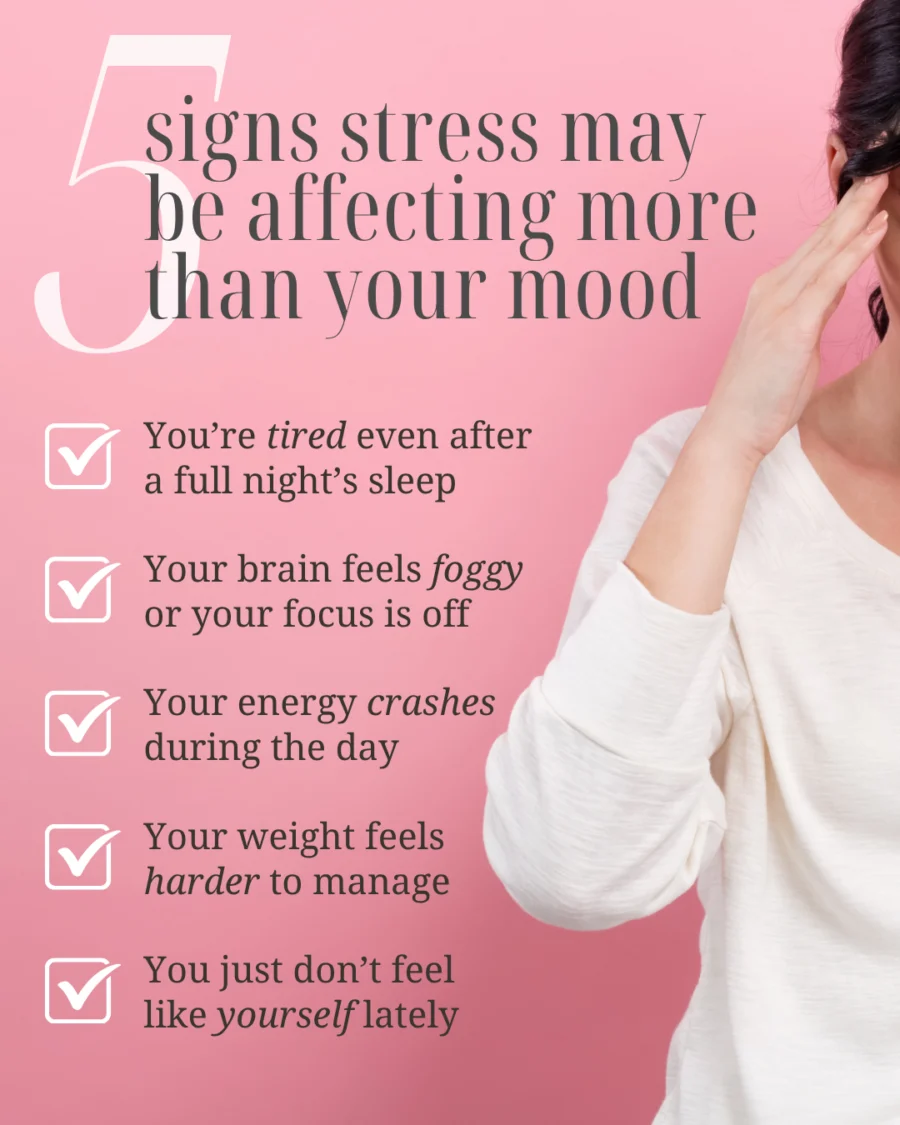
Fatigue, brain fog, changes in weight, poor sleep, feeling cold, and difficulty managing stress can all leave you wondering whether your thyroid is involved.
At the same time, many people are also hearing more about cortisol and the effects of chronic stress on hormone balance.
So, how closely are cortisol and thyroid function connected?
The answer is that they do influence one another. Your thyroid, adrenal glands, brain, metabolism, immune system, and nervous system are part of an interconnected network. When stress becomes persistent, it can affect the way thyroid hormones are regulated and used throughout the body.
That does not mean stress automatically causes a thyroid disorder. It does mean that looking at thyroid health in isolation can sometimes miss important parts of the picture.
What Is Cortisol?
Cortisol is often described as the body’s main stress hormone, but that description only tells part of the story.
Cortisol is an essential hormone produced by the adrenal glands. It plays a role in blood sugar regulation, blood pressure, metabolism, inflammation, immune function, and the body’s response to physical and emotional stress.
It also follows a natural daily rhythm.
Cortisol levels generally rise around the time you wake up, helping you feel alert and ready for the day. Levels then gradually decline and are usually lower at night, which supports the transition into sleep.
This rhythm is an important part of healthy hormone regulation.
When you experience stress, your brain activates a system known as the hypothalamic-pituitary-adrenal axis, or HPA axis. This sends signals that ultimately increase cortisol production.
That response is normal and helpful in the short term.
The concern is when the body is exposed to ongoing stress with too little opportunity for recovery.
Stress can come from many sources. Emotional strain is one example, but poor sleep, chronic pain, illness, excessive exercise, restrictive dieting, under-eating, blood sugar fluctuations, and inflammation can all place additional demands on the body.
Over time, that total stress load can begin to influence other hormonal systems, including the thyroid.
How Thyroid Function Is Regulated
The thyroid is a small gland located at the front of the neck, but its hormones affect nearly every tissue in the body.
Thyroid hormones help regulate metabolism, body temperature, digestion, cardiovascular function, energy production, and many other processes.
The thyroid does not work independently.
Its activity is regulated by communication between the brain and the thyroid gland. The hypothalamus signals the pituitary gland, which then releases thyroid-stimulating hormone, or TSH. TSH tells the thyroid to produce thyroid hormones, primarily T4.
T4 can then be converted in tissues throughout the body into T3, the more biologically active form of thyroid hormone.
This communication network is known as the hypothalamic-pituitary-thyroid, or HPT, axis.
Because the HPT axis interacts with the body’s stress-response system, prolonged stress can affect thyroid regulation in several ways.
How Cortisol May Affect Thyroid Function
Cortisol does not simply “shut down” the thyroid, as is sometimes suggested online. The relationship is more complex.
However, significant or prolonged stress can influence the signals that control thyroid hormone production and metabolism.
Cortisol Can Affect Thyroid Signaling
Glucocorticoids, the class of hormones that includes cortisol, can influence the signals produced by the hypothalamus and pituitary gland.
When cortisol levels are elevated during periods of significant physiological stress, TSH signaling may be altered.
This is one of the ways the body adapts to changing demands.
From a survival perspective, this makes sense. During illness, injury, or acute stress, the body may temporarily prioritize essential functions over processes related to growth, reproduction, digestion, or optimal metabolic activity.
The problem arises when stress is no longer temporary.
A person may not feel as though they are in a crisis, yet their body may still be dealing with chronic sleep deprivation, demanding work schedules, inadequate nutrition, high-intensity training, psychological stress, and limited recovery.
Cortisol Can Influence Thyroid Hormone Metabolism
Producing thyroid hormone is only one part of healthy thyroid function.
The body also needs to convert and use those hormones appropriately.
The thyroid produces mostly T4, which can be converted into active T3 in tissues such as the liver and kidneys. Specialized enzymes called deiodinases help regulate this process.
Glucocorticoids can influence thyroid hormone metabolism, particularly during significant physiological stress or illness.
This is well documented in conditions such as severe illness, where thyroid hormone levels may temporarily change even when the thyroid gland itself is not the main problem.
It is important, however, not to assume that every person under stress has impaired T4-to-T3 conversion.
Symptoms and laboratory values need to be interpreted in context. Fatigue, weight changes, or poor concentration can have many causes, and thyroid function is only one possibility.
What About Stress and Hashimoto’s?
Hashimoto’s thyroiditis is an autoimmune condition in which the immune system targets thyroid tissue. Over time, this can reduce the thyroid’s ability to produce hormones and lead to hypothyroidism.
Because stress affects immune function, researchers continue to study the relationship between chronic stress and autoimmune thyroid conditions.
Current evidence suggests that stress may influence immune regulation and inflammatory signaling, particularly in people who are already genetically or biologically susceptible.
However, stress should not be viewed as the single cause of Hashimoto’s disease.
Autoimmune thyroid disease is multifactorial. Genetics, immune function, environmental exposures, nutrient status, hormonal factors, infections, and other influences may all play a role.
This broader perspective is especially important in functional medicine.
Rather than looking for one isolated cause, the goal is to understand which factors may be contributing in a particular individual.
Why Cortisol and Thyroid Symptoms Can Overlap
One reason this topic can be confusing is that chronic stress and thyroid dysfunction can produce similar symptoms.
Both may be associated with:
- Fatigue
- Brain fog
- Poor concentration
- Sleep disturbances
- Mood changes
- Changes in appetite or weight
- Reduced exercise tolerance
- Digestive changes
- Menstrual changes
- A general sense of feeling physically depleted
Hypothyroidism may also cause symptoms such as feeling cold, constipation, dry skin, hair changes, and slowed metabolism.
Because the symptoms overlap, it is not always possible to determine the cause based on symptoms alone.
Someone who feels tired and stressed should not automatically assume they have high cortisol. In the same way, someone experiencing weight gain or brain fog should not assume the thyroid is always responsible.
A more useful approach is to ask what could be contributing to the symptoms and investigate appropriately.
What Does a Functional Medicine Evaluation Look At?
A functional medicine approach considers thyroid health within the context of the whole person.
That may include looking at:
- Sleep quality and circadian rhythm
- Dietary intake and overall nutrition
- Blood sugar regulation
- Stress levels and recovery
- Exercise patterns
- Digestive health
- Nutrient deficiencies
- Autoimmune activity
- Medications
- Menstrual and hormonal health
- Chronic illness or inflammation
- Family history of thyroid or autoimmune disease
This broader assessment can help identify factors that may be increasing physiological stress or contributing to persistent symptoms.
It is also important to rule out other conditions that can mimic thyroid dysfunction, including iron deficiency, vitamin B12 deficiency, sleep disorders, depression, medication side effects, and other hormonal or metabolic concerns.
What Thyroid Testing May Be Helpful?
Thyroid testing should be guided by symptoms, history, and clinical context.
TSH is generally the first-line test used to evaluate thyroid function.
Free T4 may also be measured to provide additional information about circulating thyroid hormone.
In some situations, thyroid antibody testing may be appropriate, particularly when Hashimoto’s thyroiditis or Graves’ disease is suspected.
Additional testing may be considered based on the individual’s history and findings.
Cortisol testing also needs to be interpreted carefully.
Cortisol naturally changes throughout the day, so a single random measurement may not provide a complete picture of a person’s stress response.
Medical cortisol testing is particularly important when conditions such as Cushing syndrome or adrenal insufficiency are suspected.
It is also worth clarifying the term “adrenal fatigue.”
Although people may feel profoundly exhausted after months or years of chronic stress, adrenal fatigue is not recognized as a formal medical diagnosis. True cortisol disorders are different conditions and require appropriate medical evaluation.
That distinction is important because treatment should always be based on what is actually happening physiologically rather than on symptoms alone.
Supporting Cortisol and Thyroid Health
There is no single supplement or strategy that can “reset” cortisol or fix thyroid function overnight.
In most cases, the strongest foundation begins with supporting the systems that regulate stress, metabolism, and recovery.
Prioritize Consistent Sleep
Sleep has a major influence on cortisol rhythm, metabolic health, and hormone regulation.
Aim for a consistent bedtime and wake time whenever possible.
Morning daylight exposure, a dark and cool bedroom, and reducing late-night stimulation may help support a healthier circadian rhythm.
If you regularly wake feeling unrefreshed despite spending enough time in bed, it may be worth investigating sleep quality more closely.
Conditions such as sleep apnea can contribute significantly to fatigue and should not be overlooked.
Eat Enough to Support Metabolic Health
The thyroid requires several nutrients to function properly, including iodine, selenium, iron, and zinc.
However, more is not always better.
Excessive iodine or selenium supplementation can create problems, which is why supplements should ideally be used based on individual need rather than taken automatically for “thyroid support.”
A balanced diet that includes adequate protein, vegetables, fruit, healthy fats, fibre-rich carbohydrates, and minimally processed foods can provide a strong nutritional foundation.
It is also important to eat enough.
Chronic calorie restriction, aggressive dieting, or very high levels of exercise without adequate nutrition can act as physiological stressors.
For some people, improving energy availability may be more important than adding another supplement.
Support Stable Energy Throughout the Day
Cortisol and blood sugar regulation are closely connected.
Meals that include protein, healthy fats, fibre, and appropriate amounts of carbohydrates can support more stable energy throughout the day.
Regular physical activity and resistance training can also support metabolic health when balanced with proper recovery.
The goal is not to achieve perfectly flat blood sugar levels. Normal blood sugar rises and falls. The goal is to reduce unnecessary metabolic stress and support steady energy.
Look at Your Total Stress Load
Stress management is often reduced to advice like meditation, breathing exercises, or “trying to relax.”
Those strategies can be helpful, but they may not address the full problem.
A more useful question is:
What is placing the greatest ongoing demand on your body right now?
For one person, it may be chronic sleep deprivation.
For another, it may be intense exercise without adequate recovery.
Someone else may be dealing with caregiving responsibilities, work pressure, chronic pain, or persistent emotional stress.
The goal is not to eliminate all stress. That is rarely realistic.
The goal is to reduce unnecessary stress where possible and make sure the body has enough opportunity to recover.
Ready to Get a Clearer Picture of Your Thyroid Health?
If you have been dealing with ongoing fatigue, brain fog, changes in weight, poor sleep, or other symptoms that may be related to thyroid function or chronic stress, a more comprehensive evaluation can help you understand what may be contributing.
Book an assessment today to take the next step toward understanding your symptoms and creating a personalized plan to support your health.
< Booking Link >
References
American Thyroid Association. (n.d.). Hashimoto’s thyroiditis. American Thyroid Association.
American Thyroid Association. (n.d.). Hypothyroidism. American Thyroid Association.
Chaker, L., et al. (2025). Hypothyroidism: A review. JAMA.
Kaur, J., & Rawal, P. (2025). Hashimoto thyroiditis. In StatPearls. StatPearls Publishing.
Kyriacou, A., et al. (2023). Stress, thyroid dysregulation, and thyroid cancer in children and adolescents. Endocrine, 79, 1–13.
National Institute of Diabetes and Digestive and Kidney Diseases. (n.d.). Hashimoto’s disease. U.S. Department of Health and Human Services.
National Institute of Diabetes and Digestive and Kidney Diseases. (n.d.). Hypothyroidism (underactive thyroid). U.S. Department of Health and Human Services.
National Institute of Diabetes and Digestive and Kidney Diseases. (n.d.). Thyroid tests. U.S. Department of Health and Human Services.
Petrowski, K., et al. (2025). Stress and thyroid function: From bench to bedside. Hormone and Metabolic Research.
Thau, L., Gandhi, J., & Sharma, S. (2023). Physiology, cortisol. In StatPearls. StatPearls Publishing.
Wrońska, K., et al. (2024). The role of the immune system in the course of Hashimoto’s thyroiditis. International Journal of Molecular Sciences.